
Community
See how they run: There’s a high chance J.R. Eppler is coming to a doorstep near you
By Marcus Chen
Advertisement · Why this ad?
Marcus manages the day-to-day editorial workflow across all brands, coordinating coverage assignments and ensuring editorial standards are met. He previously served as city editor at the Pioneer Press and holds a degree in Political Science from Carleton College.
More from Marcus →
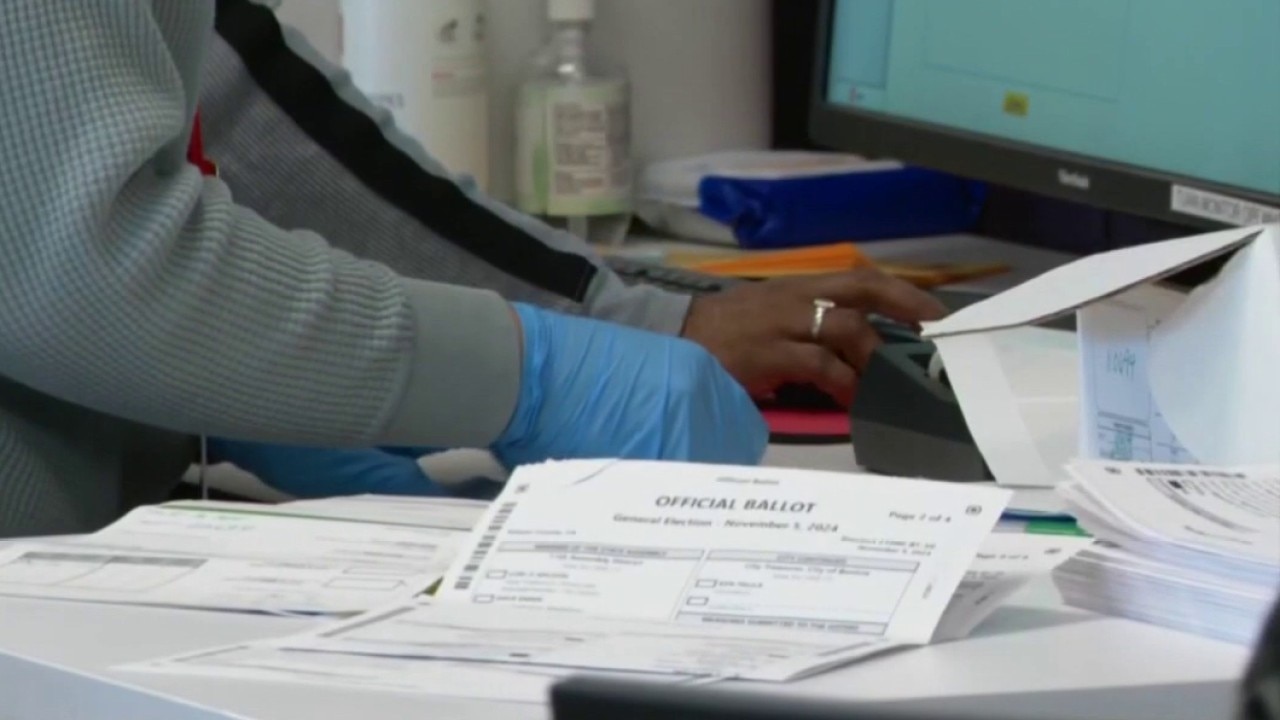
In the bustling heart of San Francisco, where innovation meets tradition, a quiet but profound debate is unfolding. Proposition D, a measure poised to tighten the reins on ballot access, has sparked a fervent discussion among residents. Critics argue it disproportionately affects citizen-driven initiatives, potentially silencing the voices of those without deep pockets, while proponents champion it as a necessary reform to streamline local governance. This tension between maintaining democratic access and curbing what some perceive as special interests creates a battleground for the future of civic engagement in our beloved city.
At its core, Proposition D, backed by nearly $14 million from allies of Mayor Daniel Lurie, seeks to fundamentally alter how measures reach San Francisco's ballot. The proposed charter amendment aims to increase the number of signatures required from registered voters and raise the threshold of support needed from the Board of Supervisors. Currently, an initiative can qualify for the ballot with signatures from 2 percent of registered voters, or roughly 10,600 individuals. Prop. D would quadruple this requirement to 8 percent, demanding approximately 42,500 signatures.
Beyond signature thresholds, Prop. D also targets the role of the Board of Supervisors and the Mayor. Presently, four supervisors can place a measure on the ballot, and the Mayor holds unilateral authority to do so. The proposition would eliminate the Mayor’s sole power and raise the supervisory requirement from four to six, mandating a majority of the board to advance an initiative. These changes are presented by supporters as a way to cut down on the multitude of propositions voters face annually and prevent 'special interests' from dominating the ballot.
However, an analysis of local initiatives since November 2016 reveals a different picture. Of the 123 local measures San Franciscans have voted on in the past decade, approximately 70 percent would have been unaffected by Prop. D. This suggests that the measure's impact might be more targeted than its broad objectives imply. For instance, over half of all measures were placed on the ballot by a majority of supervisors, a pathway that would largely remain unchanged under the new rules.
Only 18 percent of local initiatives—excluding charter amendments and other special elections—were placed on the ballot via signature-gathering in the last decade, according to data from the Department of Elections. This year, however, proved an outlier, with seven of the 11 propositions on the November 3 ballot qualifying through signatures, including three significant charter reform amendments championed by the Mayor's office. This highlights the dynamic nature of ballot access and the varying methods employed by different campaigns.
The proposed changes have ignited concern among those who champion grassroots civic engagement. Dale Carlson, a longtime political consultant deeply involved in San Francisco's political landscape, voiced a sentiment shared by many critics: “If the mayor wants to give up his power, okay. If the board wants to give up theirs, okay. But don’t deny citizens access to the ballot.” His words underscore a fundamental worry that Prop. D could disenfranchise ordinary citizens and community groups who lack the extensive resources required to meet the new, higher thresholds.
Randy Shaw, executive director of the Tenderloin Housing Clinic, echoed these concerns, stating, “There won’t be any more grassroots ballot initiatives — they can’t afford it.” Shaw, who authored Prop. H in 1992 (which capped annual rent increases for rent-controlled units) and backed Prop. G in 1994 (creating the Department of Building Inspection), noted that both measures qualified through signature-gathering. He firmly believes they would have faced insurmountable challenges under Prop. D's proposed requirements. “Every gain that tenants won from 1992 into the 2000s occurred through ballot measures that would not have qualified under Prop. D,” he asserted, highlighting the historical significance of citizen-led initiatives in shaping the city.
The financial implications of Prop. D are substantial. The signature-gathering industry has become a costly endeavor, with workers often earning up to $15 or more per signature. A recent report from the city’s Budget and Legislative Analyst’s Office found that Prop. D would dramatically increase the cost of placing an initiative on the ballot from an estimated $320,000 to approximately $1.5 million. This steep increase creates a significant barrier for smaller, community-led campaigns that rely on volunteer efforts and limited budgets.
Carlson himself was involved in Prop. G in 1996, which established district-based elections for the Board of Supervisors, and Prop. M in 1986, which set the country’s first annual limit on commercial office development. He contends that neither of these impactful initiatives would likely have qualified under Prop. D’s stricter rules. When asked about the future of grassroots campaigns should Prop. D pass, Carlson offered a stark, two-word response: “Good luck.”
Proponents of Prop. D argue that it would bring San Francisco in line with other California cities. State law sets a default threshold of 10 percent of registered voters for city initiative ordinances, though charter cities like San Francisco can set their own. Cities such as Oakland and San Diego require 10 percent. Mayor Lurie has cited Los Angeles County as having an even higher 15 percent rate, though critics point out this figure applies to the number of voters who cast ballots in the last gubernatorial election, not all registered voters, making it a smaller effective percentage (around 4.1% of registered voters in 2022).
The debate around Prop. D touches upon fundamental principles of democratic participation and the role of citizens in shaping their local government. For families and community groups, the ability to directly propose and vote on measures that affect their daily lives—from housing policies to neighborhood development—is a cornerstone of civic engagement. While streamlining the ballot may have merits, the potential for such measures to disproportionately impact those without significant financial backing raises questions about equitable access to the democratic process.
Our city has a rich history of citizen-led movements that have brought about meaningful change, often driven by dedicated individuals and families committed to improving their communities. Preserving avenues for these voices to be heard is crucial for a vibrant, responsive local government. The strength of our community often lies in the collective wisdom and diverse perspectives of its residents, and ensuring that all voices, regardless of economic standing, can contribute to public discourse is paramount.
As the election approaches, residents must carefully weigh the implications of Prop. D. The measure’s token opposition, comprising several labor groups and a local affordable housing nonprofit, has managed to cobble together $206,000, but they are outspent 67-to-1. Their campaign, largely through mailers and flyers, carries a clear message: “Don’t rob our right to vote.” This stark financial disparity highlights the challenges faced by grassroots efforts when confronting well-funded campaigns.
Ultimately, the passage or failure of Prop. D will determine the future landscape of direct democracy in San Francisco. Will it lead to a more focused and efficient ballot, or will it inadvertently create a system where only the most well-resourced can initiate change? The answer lies in the hands of the voters, who must decide whether their voices will continue to echo in the halls of power or risk fading into silence. Ensuring that our city remains a place where all families and individuals feel empowered to shape their future is a responsibility we all share.
By Marcus Chen

By Katherine Langford
By Katherine Langford
By Marcus Chen