
Community
Cempaxochitl, the Mexican marigold.
By Marcus Chen
Advertisement · Why this ad?
Marcus manages the day-to-day editorial workflow across all brands, coordinating coverage assignments and ensuring editorial standards are met. He previously served as city editor at the Pioneer Press and holds a degree in Political Science from Carleton College.
More from Marcus →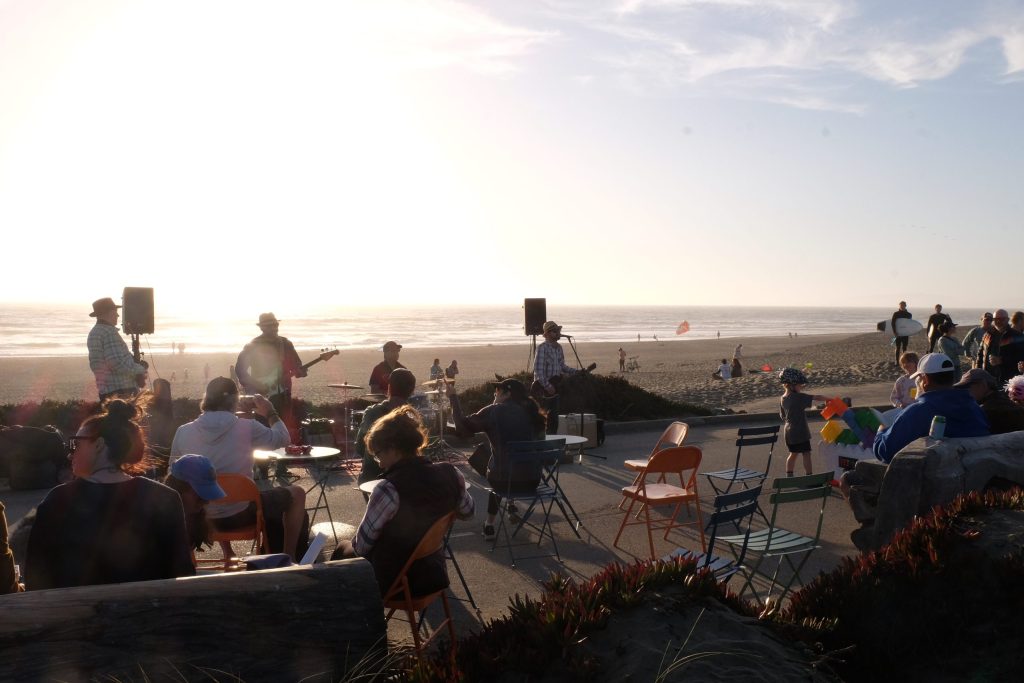
Voters in San Francisco’s Westside neighborhoods, who voted overwhelmingly against transforming the Great Highway into a coastal park two years ago, have come around: In Tuesday’s election, residents in both the Sunset and Richmond flipped to embrace Sunset Dunes, where they go to walk their dogs, run along the coast or teach their kids to ride bikes. Brandon Martin was one of them. Martin, who lives in the Outer Sunset near the Great Highway and Sloat Boulevard, did not support Prop. K in 2024, which closed the Upper Great Highway to make way for an oceanfront park. He was worried about traffic flow and the city’s execution of the park. “I was concerned nothing would really happen with it,” Martin said. “If it’s just a two-mile long stretch of sand slowly building up over a roadway, is that really a usable park? No one wants to hike through ankle deep sand.” He changed his mind after the skate park near Sloat Boulevard was installed in June last year. “Having a place where the kids can just bail out of the house, go a couple blocks and be at a skate park is amazing,” he said. Martin still missed riding his motorcycle on the scenic Great Highway, he said. “But it’s well worth it.” Proposition G would have reverted Sunset Dunes park back to a coastal road on weekdays. As of Sunday, a majority of voters in both the Sunset and the Richmond were against it, albeit barely: Prop. G was losing in the Richmond by 117 votes, and in the Sunset by 277. Both areas had voted overwhelmingly, 64-36, against the park in 2024. Support for the park grew 14 percentage points in both neighborhoods this year to eke out a majority. Its support also grew citywide: Prop. G lost b y 32 points — a 34-66 split compared to 45-55 in 2024. About 98% of the vote was counted as of Sunday. In the Sunset, it was those living closest to the park who voted most to save it: All the precincts adjoining the park voted no on Prop. G. The switch was apparent early on. Nearly half of the 1,600 requests for No on G window signs came from the Sunset, according to Michael Howley, a park supporter who coordinated the delivery of those signs. About 33% came from west of Sunset Boulevard. On election night, Lucas Lux, the president of the nonprofit Friends of Sunset Dunes who ran the No on G campaign, credited Phil Ginsburg, the former head of the Rec and Park Department, for acting quickly to open the park in 2025. That, he said, “helped us make the park show the glamor of what it can be.” For No on G, the park became its best campaign tool and the department was quick to add amenities. After Ginsburg left the city at the end of 2025, his successor, Sarah Madland, continued that support. The Friends of Sunset Dunes funded and built Shipwreck Cove , a playground that opened in September, which the city couldn’t afford. Lux said the nonprofit stepped in — a collaboration that won Madland’s support. That playground, too, helped convince voters that the park was worth keeping. Joshi Marshall, an Outer Sunset resident, was skeptical of Prop. K in 2024 and its impact on traffic but walked Sunset Dunes “religiously” with his wife once it opened. His daughter now spends time there. “Local businesses thrive,” and the nearby cafes are “kind of bumping” on the weekends, he said. Catie Stewart, the No on G campaign spokesperson, said the campaign decided early on that it “shouldn’t waste time in the Sunset and Richmond” because “people who are dug in are dug in at this point.” The campaign targeted other neighborhoods, hoping that “a rando who lives in Alamo Square who just moved to the city” would be an easy yes, Stewart said. “Those are the people who are movable.” The campaign also kept its messaging simple: “It’s a park closure,” said Stewart. Meanwhile, the Yes on G campaign pushed a more complicated “compromise” message — bringing back cars on the weekdays but keeping it car-free on weekends. To Otto Pippenger, the field director of the Yes on G campaign, Prop. G was simply outspent. The No on G campaign raised over $821,000 in 2026, about five times as much as its proponents, with the majority coming from just two tech executives. “It’s about extremely well-funded campaigns’ ability to motivate a low-information segment of the electorate,” he said. For park advocates, defeating Prop. G was a relief — city voters have weighed in for the third time in four years and, the campaign said, sent a message that they are eager to move on. “This is it. We no longer have to spend so much energy and time fighting for the park to exist at all,” said Eliza Panike, the No on G campaign’s field director. Joel Engardio, the former Sunset supervisor who was recalled for his support of the park, said, “What a turnaround. I was just two years ahead of my time.” Bailey Zitko contributed to the reporting of this story.
By Marcus Chen

By Katherine Langford

By Marcus Chen

By Marcus Chen